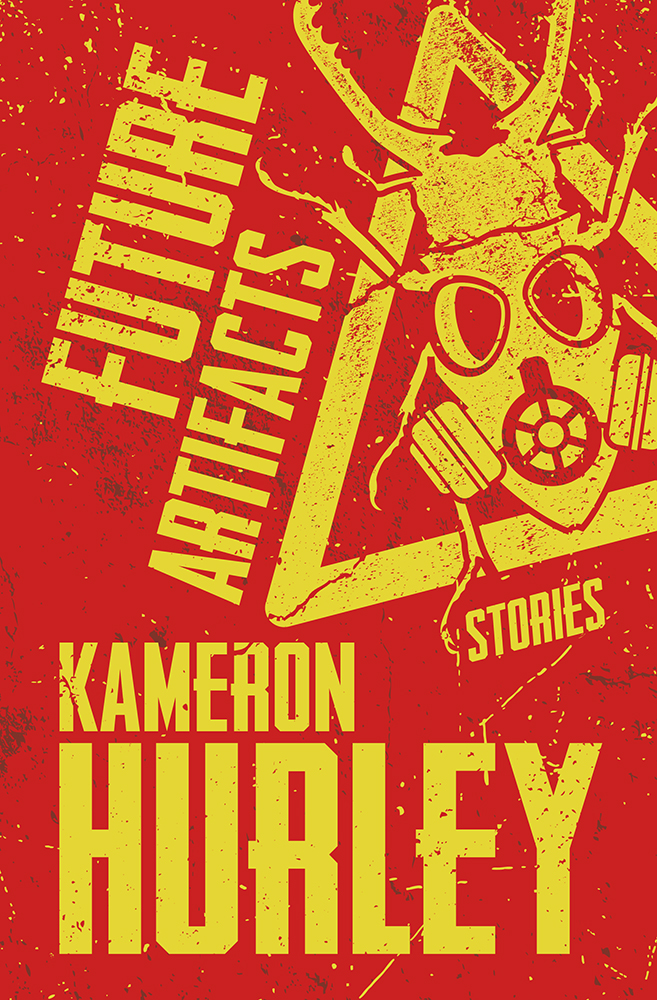
This update went out in my most recent newsletter. If you’d like to get updates like this, sign up for The Hurley Cut: Story & Power.
Somewhere between 2011 and 2020, I lost my way.
I’ve been trying to untangle exactly what happened: mistakes made, near-misses, lucky breaks lost, poor choices. I was building a narrative of defeat from a career that has been outwardly pretty successful.
Twelve books! Awards! Events! A book tour!
But it wasn’t successful in the way I always imagined it was going to be.
In fact, it was blisteringly exhausting.
Every. Fucking. Moment.
It turns out, when you’re juggling a day job on top of a writing career for over a decade, shit gets exahusting.
Events are exhausting. Reviews are exhausting. Entitled people are exhausting.
Because you aren’t just managing all that for one job. You’re doing it for two. And your whole waking life becomes work.
And above all, what I found is that on top of corporate work, the corporate reality of publishing? Is just as exhausting as the corporate grind of a day job.
Like the day job, publishing is just another capitalist enterprise, one we have very little control over. Here’s this work I’d been crafting since I was twelve years old, that had come to make up nearly my entire identity, getting chewed up into a machine. Bankrupt publishers. Missing checks. Lawyers! A whole seething mess of business bullshit that is so far outside the creative dream of writing that if you’re not careful, you can start mistaking the publishing for the writing.
When I was 24, I imagined that when I hit 40, I’d be making a living writing novels. And I imagined that to be some kind of Hallmark movie life, at some point. Like, I just had to “break out” and then all my troubles would magically be over. So I wrote a book, and another book, and another book…
And it turns out you just… keep… writing… more… books?
There was never a “get rich” moment. I soon learned even from fairly successful full-time writers that the idea you’d get to a certain point and just coast was a pernicious myth for any but the .01%.
So instead of living my best Murder, She Wrote Life, I spent my 40th year on this spinning planey hunkering down in a pandemic, clinging to a day job in advertising, pouring money into elder care, deep in debt, flitting from one layoff to the next, drinking and watching Netflix because the pain of the world I had imagined – personally, nationally, globally, professionally – was not the world I’d gotten. Like a toddler having a tantrum, I broke under the weight of repeated health and financial disasters, layoffs, family deaths, dying pets, and screaming dissapointments.
I drank all the time so I wasn’t screaming all the time.
I’ve been asked throughout my career how I’ve balanced a day job and the novels, and I have the same answer every time: there’s no balance. When you’re doing great at one, the other falls down.
You can have it all, as they say: you just can’t have it all at once.
At some point, when you’re deep in the pit, you need to decide if you’re going to stay in the pit and die there, or climb back out.
I decided to climb back out.
Fall down seven times. Get up eight.
That’s the secret to living, right there.
I escaped the personal and professional disasters of the early 2020s slowly, and then all at once.
The effort it took to come back was pretty epic. But I’d learned a lot during that time, and one of those was that focusing on things I couldn’t control was a quick route to despair and despondency. I came back smarter, and emotionally stronger. It meant that I was perfectly prepared for the triple-hit of LLMs destroying the way my 20-year day job career operated, the crash of the fascist tide, and another lawyerly round of publishing rodeo.
I learned enough in the pits that when the world kept going – like it does – I did not break.
I changed how I lived my life. Turning away from the attention economy that hijacked my brain during the pandemic, being ruthless about social channels and screen time. Instead of focusing on everything in the world I couldn’t control, instead of focusing on the not-fairness of life, the universe, and everything, I focused on NOW.
I have a steady job NOW. I have health insurance NOW. I have a roof over my head NOW. I have insulin in the fridge NOW.
I focused on what I could control. On what I could do.
My dad had died. My cousin died. My dogs died. My spouse had a major cardiac event. I was laid off, twice.
But I couldn’t control any of that. What I could control was what I did with it.
This was a whole epic journey, and there’s no “one weird trick” I can share for how I did that, but it involved making a choice.
Did I want to write again, or not write again? Because if I wanted to write again, to REALLY write, to tell all the stories I’ve wanted to tell since I was a kid, I had to remake my whole world, or at least what I could control of it.
I finished my first book in five years THESE SAVAGE STARS (out January 2027!). I changed the way I communicated at the day job. Most importantly, I changed where I focused my time and attention. I took up painting, threw myself into four-hour (and sometimes ten hour!) gardening days, and alas, quit drinking (RIP). This was the world I could control: my actions. My thoughts.
I turned in THESE SAVAGE STARS to my publisher last January. Since then, I’ve been working on a weird fantasy book called IF WE SURVIVE THE BLOOM, which I’m pitching as Platoon Meets Annihilation, with more fucking.
It’s been a delight to build a new world. To trot out another cadre of fucked up characters and their fucked up problems. Time consuming, yes, but utterly joyful and satisfying in a way that I have yet to replicate in any other way in my life. What else would I rather be doing with my time?
I spent plenty of years doing other things. It turned out they were never as satisfying as writing.
Maybe that’s the lesson I needed to learn at that point in my life.
Sometimes, we break apart. Not everyone comes back.
But some of us come back better.
Let’s get better.
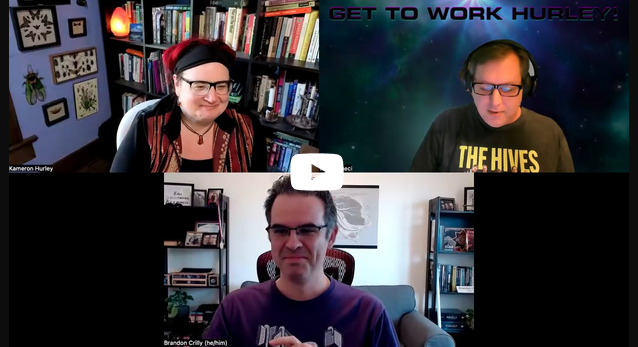
Get to Work, Hurley!
The latest episode of Get to Work, Hurley features Brandon Crilly, who joined Tim and I to talk about his latest book, CASTOFF. We chat about the evolution of a writer’s “voice,” the differences between writing across different types of media, and that age-old classic: balancing creative work with capitalism.
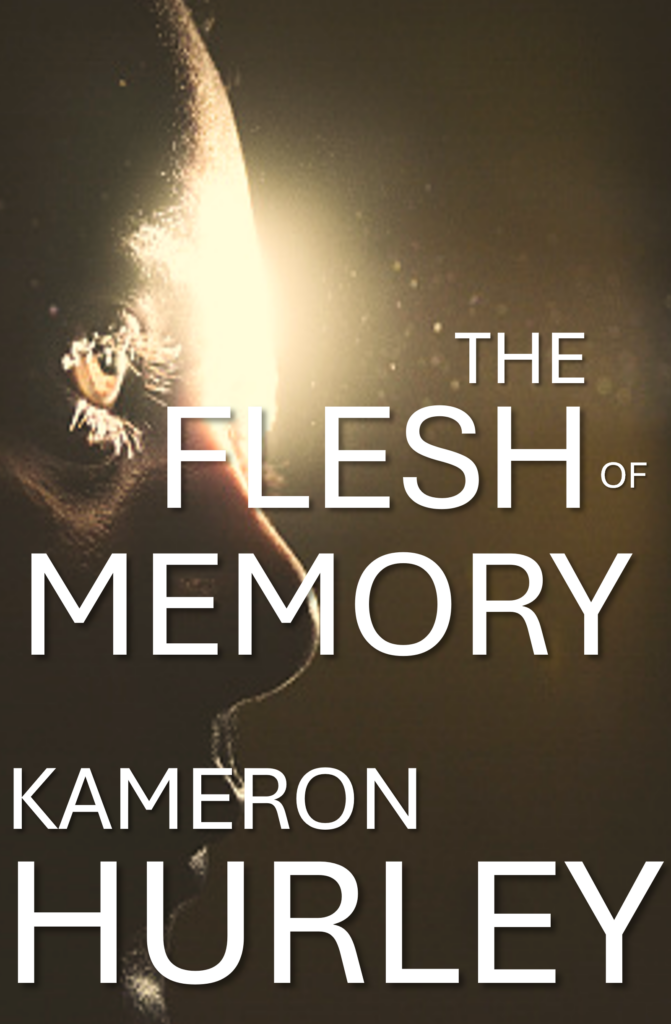
Fresh Fiction: “The Flesh of Memory”
In this month’s short story, we meet a flensing archivist who used to carve history into flesh… and now watches the young throw it all away. Do they really know who they are anymore?
For those looking for more regular updates, be sure to join me on Bluesky. Or, get access to our exclusive Hurley’s Heroes Discord server when you subscibe here.
Be excellent to each other, folks. We’re all we’ve got.